Products
Products are created to be used within documents throughout iplicit features.
This section will show all Products on the system. To view specific Products for differing documents, you can view these on the individual areas - Purchase products, Sale products, Expense products, Stock products, Timesheet products or Loan products.
How to view Products
Viewing Products
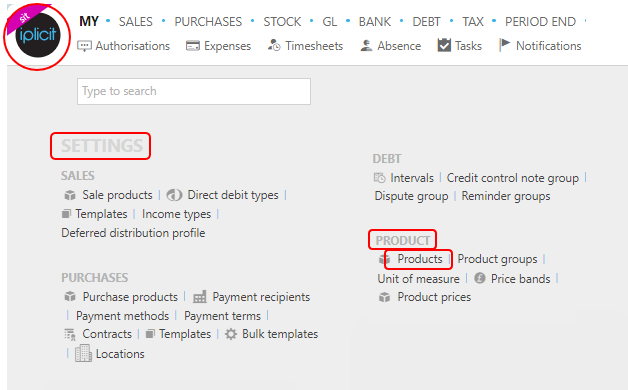
Select Product / Products from the Settings section of the pulse menu -
Note
This is an example screenshot of the pulse menu.
Position of the menu items within pulse will vary according to available options and dependant on personal screen resolution.
or enter Products in the Quick Launch Side Menu.

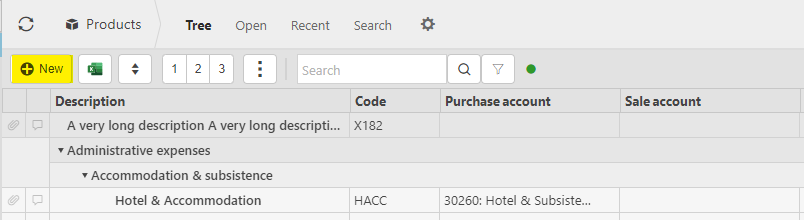
This will then show all the Products on the system where normal customisation of Sets can be used.

And Tree option will be available where you can toggle the rows to different levels.

Tip
To modify the columns displayed, select  on the top right of the page, then tick/untick the information you want to hide or display.
More attribute information
- Description: This will describe the product.
- Code: The unique code to identify the product.
- Purchase/Sale Account: When the product is used it will be analysed under this Chart of account code on the P/L.
- Purchase, Sale, Expense, Stock, SKU, Timesheet, Loan, Payroll and Job: These boxes are ticked showing the other features that the Product is used in.
How to create Products
Create a new Product
Select Products from one of the options as shown above in Viewing Products.
Select New.
Enter the following required fields.
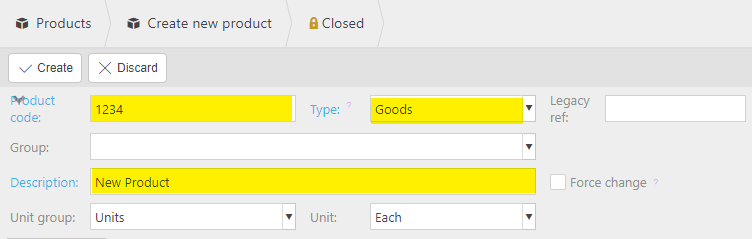
Product code: Enter a unique code.
Description: Free text.
Type: Select from the dropdown options.
Other fields are mandatory.
Group: Select a Product Group from the dropdown options, which will result in some fields being auto filled with the group's defaults.
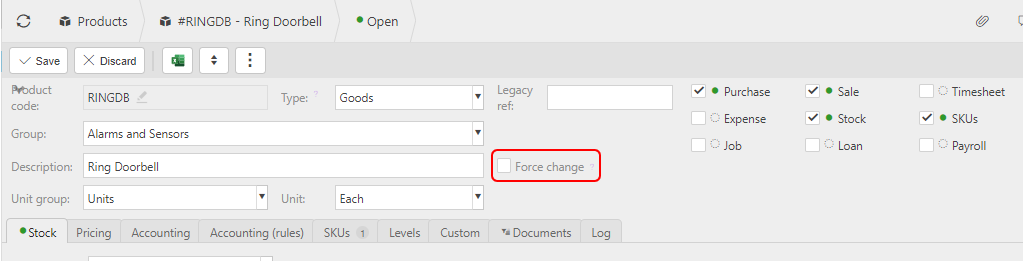
Force Change: Tick this if you would like Users to change the product's description upon using it.
Unit group: This is the Unit of measure group.
Unit: This is the Unit of measure. Choose a Unit group and the Unit both from the dropdown options.
Enter the features that you would like the product to be available for in the Tick boxes.
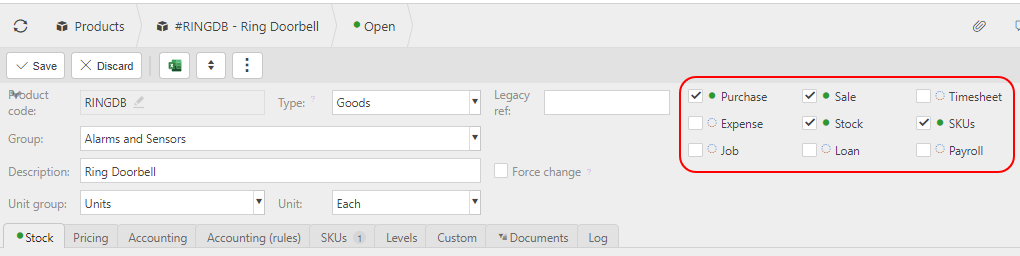
Depending on the feature boxes that have been selected, various tabs will be available.
If Purchase or Sale is selected then there will be an Accounting tab where you enter the Chart of account.
The way the product is listed in the P/L through Chart of account codes is setup here.
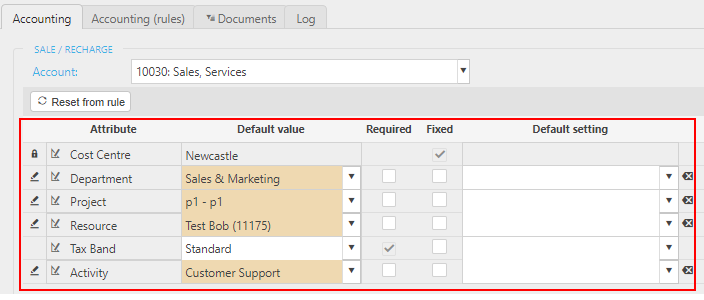
For example,

Once the Account has been selected, the following popup appears. You can now add default values, and select if they are required or fixed for any documents that use this Product.
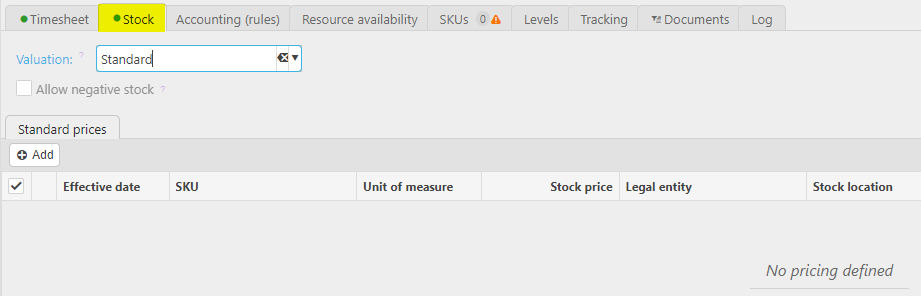

Once all Product details are entered, select Save.
- This Product will now be available for use.
How to add Product availability
Add product availability
If you would like to change/amend a Product to allow the Product to be used in other features, double click the Product then select Edit.
You can now tick the features that you would like to add to the Products availability.
Select Save when finished.
How to change Product information
Change product information
If you would like to change Product information, for example allow the Product group or description, double click the Product then select Edit.
You can now make changes to the product information.

Select Save when finished.
How to force a description change
Force a user to change the description upon using a product
If you would like to force Users to change Purchase product information upon using it, double click the Product then select Edit.
Tick the Force change tick box.
How to Import/Export Products
Import/Export Products
Select Products from one of the options as shown above in Viewing Products.
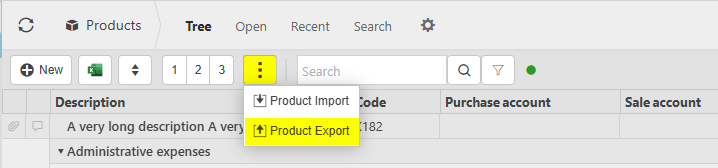
Select the
 icon and select Product Import.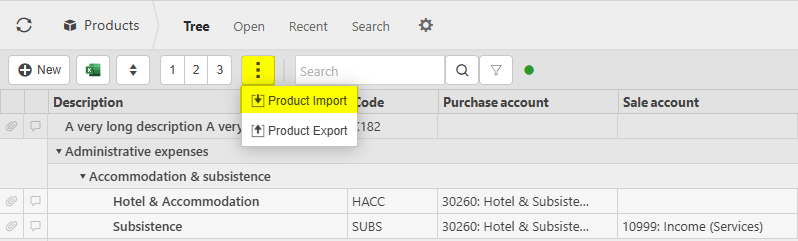
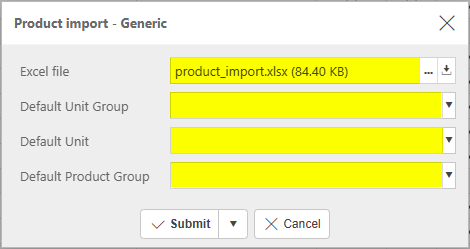
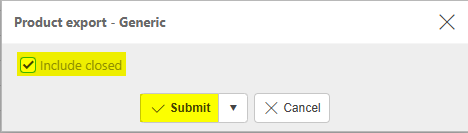
Enter the name of the Excel file, which is saved on an external source, and other options.
Tip
To create an Import file with the correct field names and formatting, Export a file first and save to your external source. Then use this file to add details ready to import.
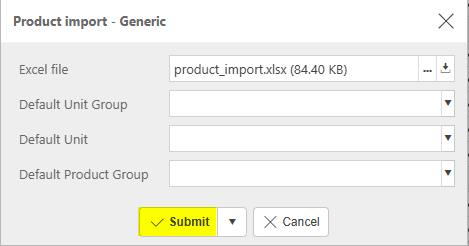
Select Submit.
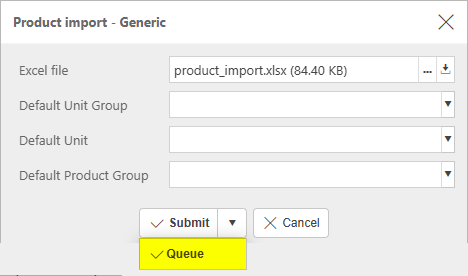
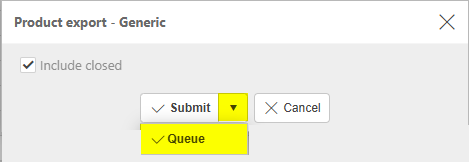
Selecting Queue from the dropdown option will queue the import process until other actions in iplicit are completed.
Warning
iplicit allows a maximum of 5,000 rows in a single Import.
If your Import is too large, an error message will tell you that the Import cannot be processed and will advise you to create smaller Import files.
If the latter is not possible, please contact Customer support.
Updated December 2025