Search Results for

    Show / Hide Table of Contents

    Product Groups

    Product Groups are created to be used within Products throughout iplicit features.

    Note

    To view the legacy version, please select Legacy User Guide.

    How to view Product Groups

    Viewing Product Groups

    As per Generic Navigation options, either from left-hand navigation panel, expand Settings and select Product groups from the Product folder or enter Product groups in the Search option.

    This will then show the Product groups on the system where normal customisation of Sets can be used.

    • Description: This will describe the product group.
    • Code: The unique code to identify the product group.
    • Purchase, Sale, Expense, Stock, SKU, Timesheet, Loan, Payroll and Job: These boxes are ticked showing the other features that the Product group is used in.
    Tip

    To modify the columns displayed, select option on the right of the column display, then tick/untick the information you want to hide or display.

    How to create Product Groups

    Create a new Product group
    1. Select Product groups from one of the options as shown above in Viewing Product Groups.

    2. Select New.

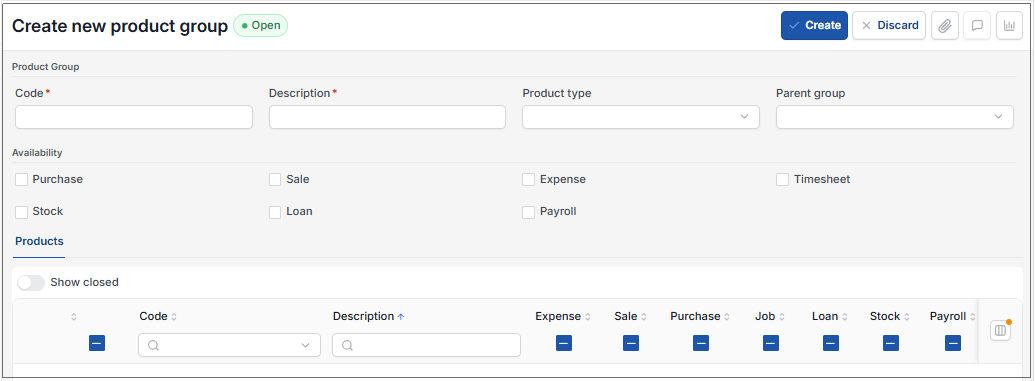
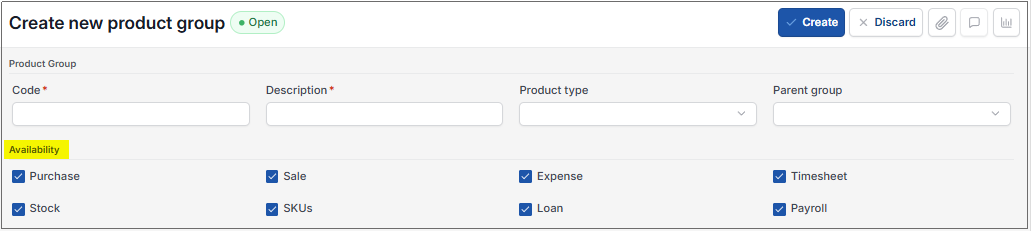
      • Code: Enter a unique code.

      • Description: Free text.

      • Product type: Select from the dropdown options.

      • Parent group: Select a group from the dropdown options.

    3. Enter the features that you would like the product to be available for in the Tick boxes:
    4. Depending on the feature boxes that have been selected, various tabs will be available.
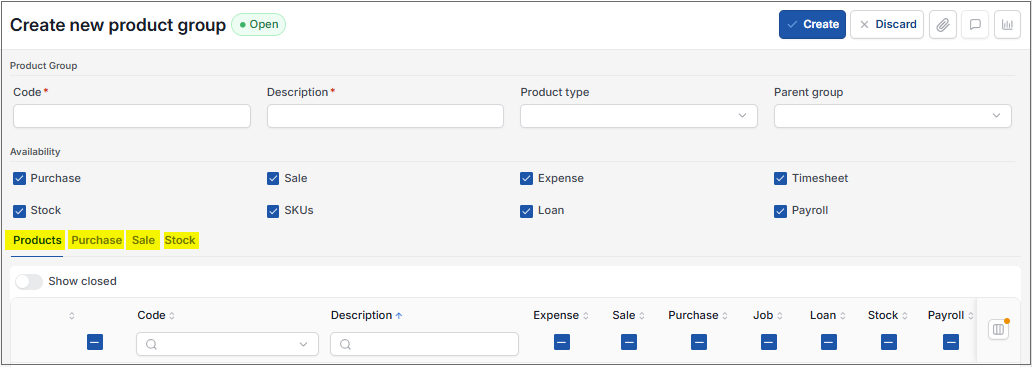
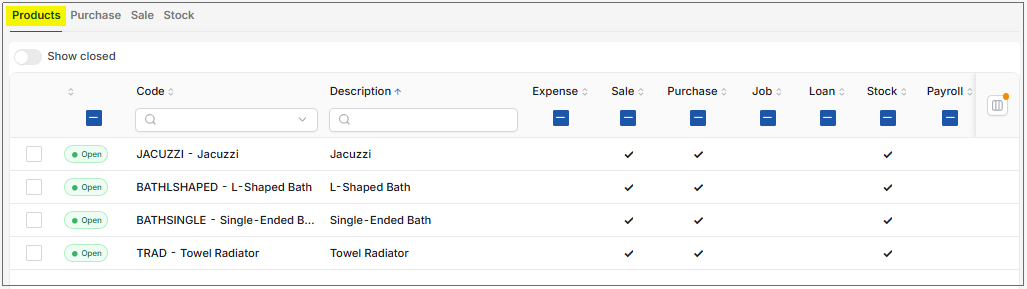
      • Products
      • Purchase
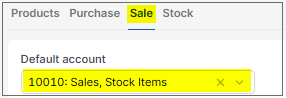
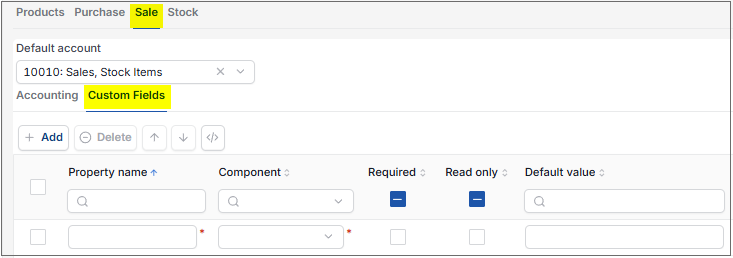
      • Sale
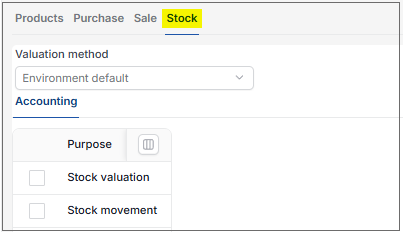
      • Stock

      This tab will show what Products are linked to this Product group.

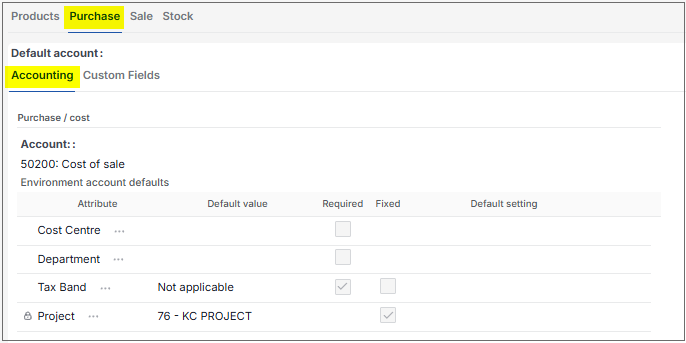
      This tab will only show if Purchase option is ticked in the main details.

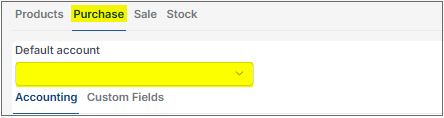
      • This allows a default account to be entered via the dropdown list of Chart of account codes. When this product group is used elsewhere in the system, it will automatically inherit the defaults setup in this section. Required and Fixed options can be set as well.

      • Custom fields can be added to the Product Group by selecting in this Custom fields tab, then filling out the selection criteria.
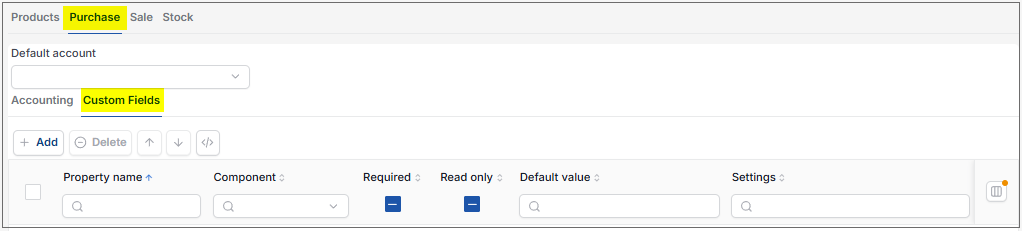
        Select here for further help setting these Custom Fields.

        Warning

        You cannot add a Custom Field containing a space. If you do, you will get a warning message and will be prevented from completing the Save.

      This tab will only show if Sale option is ticked in the main details.

      • This allows a default account to be entered via the dropdown list of Chart of account codes. When this product group is used elsewhere in the system, it will automatically inherit the defaults setup in this section. Required and Fixed options can be set as well.

      • Custom fields can be added to the Product Group by selecting in this Custom fields tab, then filling out the selection criteria.
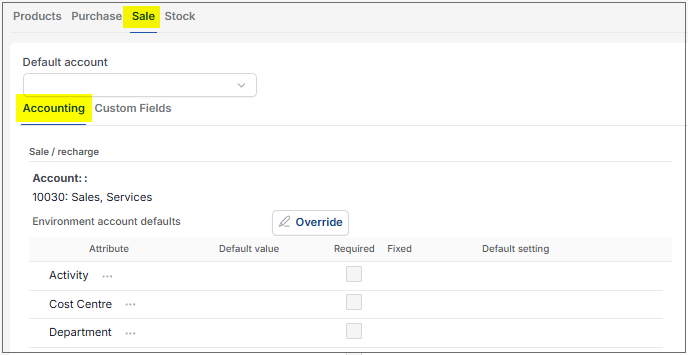
        Select here for further help setting these Custom Fields.

        Warning

        You cannot add a Custom Field containing a space. If you do, you will get a warning message and will be prevented from completing the Save.

      This tab will show if Stock option is ticked in the main details.


    1. Once all Product group details are entered, select Save.

      • This Product group will now be available for use.

    How to add product availability

    Add product availability
    • If you would like to change/amend a Product group to allow the Product group to be used in other features, select the Product group then select Edit.

    • You can now tick the features that you would like to add to the Product group availability.

    • Select Save when finished.

    How to Import/Export Product Groups

    Import/Export Product Groups
    • Import
    • Export
    • File information
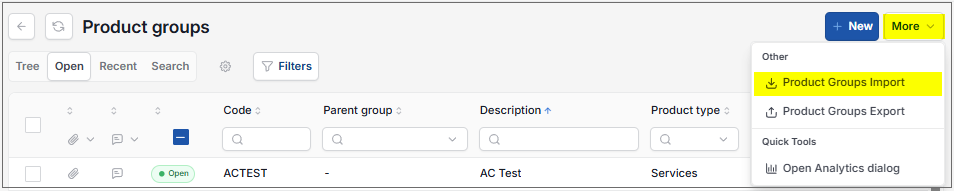
    1. Select Product Groups from one of the options as shown above in Viewing Product Groups.

    2. Select Product Groups Import from the option.
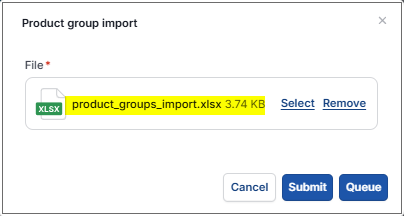
    3. Enter the name of the Excel file, which is saved on an external source.
      Tip

      To create an Import file with the correct field names and formatting, Export a file first and save to your external source. Then use this file to add details ready to import.

    4. Select Submit.

      Selecting Queue from the dropdown option will queue the import process until other actions in iplicit are completed.

      Warning

      iplicit allows a maximum of 5,000 rows in a single Import.

      If your Import is too large, an error message will tell you that the Import cannot be processed and will advise you to create smaller Import files.

      If the latter is not possible, please contact Customer support.

    1. Select Product Groups from one of the options as shown above in Viewing Product Groups.

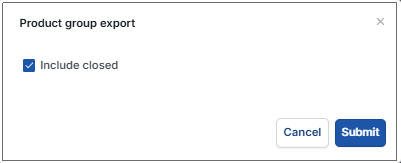
    2. Select Product Groups Export from the option.

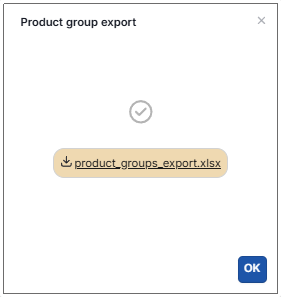
    3. Tick include closed if required, then select Submit to create an Excel file on an external source.

    4. The Export file is created as an Excel spreadsheet on your local data source.

    The following fields are Exported/Imported - (Fields shown in bold are mandatory):

    • Code: Code of the Product group (This should be unique and not contain spaces or characters, such as commas and apostrophes). If the import includes a code that already exists, then the product group will be updated and will not create a new one. If there is more than one code the same, then the import will produce an error.
    • Description: Description of the Product group.
    • Product Type: S for Services, G for Goods, O for Other.
    • Parent Group: This should be validated against existing Product groups set-up in iplicit.
    • Is Purchase: Tick box if it is a Purchase Product group.
    • Is Sale: Tick box if it is a Sales Product group.
    • Is Expense: Tick box if it is an Expense Product group.
    • Is Timesheet: Tick box if it is a Timesheet Product group.
    • Is Stock: Tick box if it is a Stock Product group.
    • Is Loan: Tick box if it is a Loan Product group.
    • Is Payroll: Tick box if it is a Payroll Product group.
    • Is Active: Tick box if the Product group is open.
    • Purchase Account: Default Chart of account code for purchases of products associated to the Product group. This should only allow Chart of account codes that have the Purchase box ticked on their chart of account record.
    • Sale Account: Default Chart of account code for sales of products associated to the Product group. This should only allow Chart of account codes that have the Sale box ticked on their chart of account record.

    Updated October 2026

    In this article
    Back to top Generated by DocFX