Stock Products
The Stock products in this section will be available for use throughout the Stock functions.
How to view Stock Products
Viewing Stock products
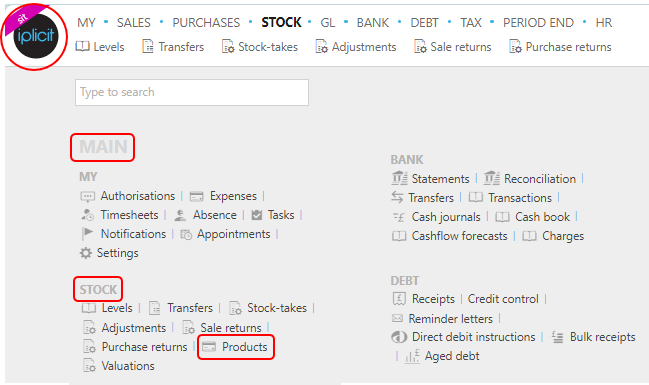
Select Stock / Products from the Main section of the pulse menu -
Note
This is an example screenshot of the pulse menu.
Position of the menu items within pulse will vary according to available options and dependant on personal screen resolution.
or from the Main Menu select Stock then Products -

or enter Stock products in the Quick Launch Side Menu.
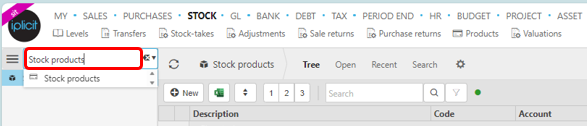
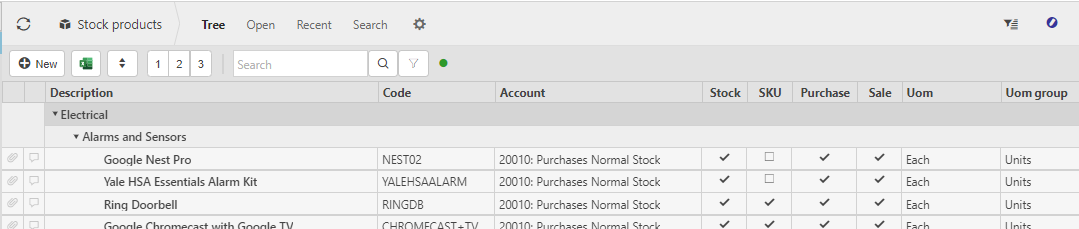
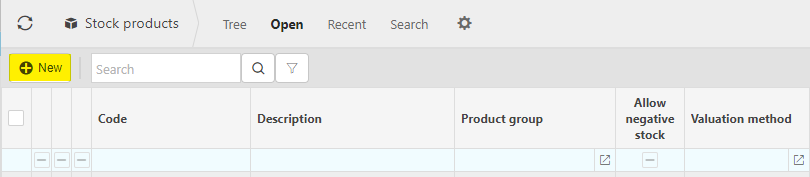
This will then show the Stock products on the system where normal customisation of Sets can be used.
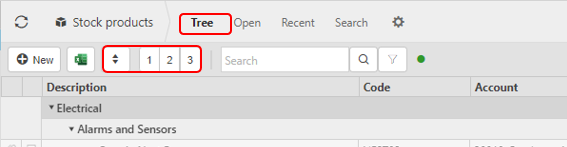
And Tree option will be available where you can toggle the rows to different levels.
Tip
To modify the columns displayed, select  on the top right of the page, then tick/untick the information you want to hide or display.
More Information
- Stock Code: This is the code that was chosen when the stock product was first created.
- Product group: The Product group will determine defaults adopted by the stock product e.g. its availability for sale and purchase documents.
- Allow negative stock: Negative stock is only allowed for Standard valuation method.
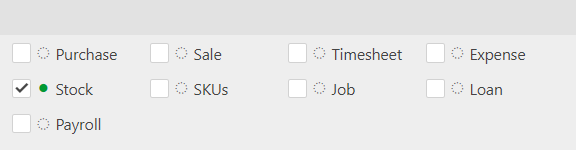
- The tick boxes: Whether it’s an expense, sale, purchase, job, loan, stock or payroll product.
How to create/edit Stock Products
Creating/Editing Stock products
Select Stock products from one of the options as shown above in Viewing Stock products.
Press New -
or select and open the Stock product, then select Edit -

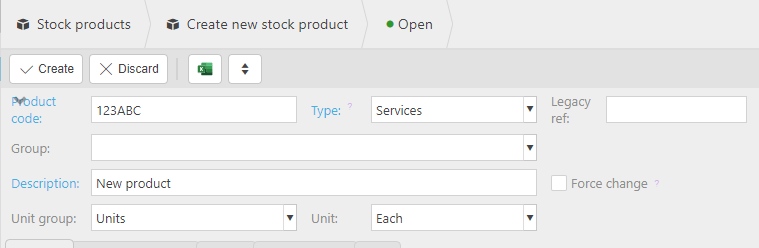
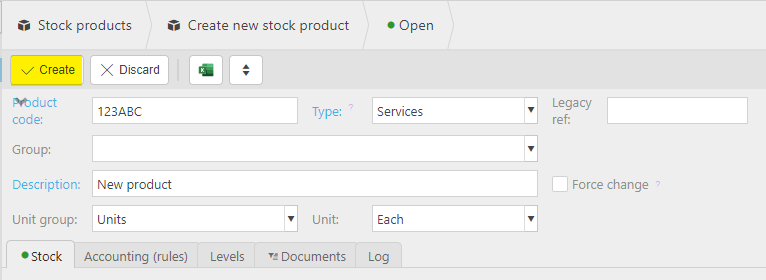
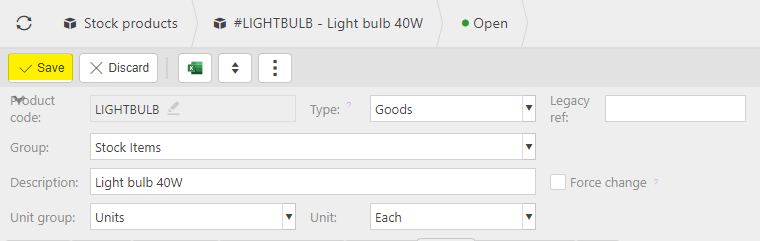
Enter or edit the fields as required.
Product code:
Group: Select a Product group.
Description: Enter a product description to identify the product.
Unit group: Select a Unit group.
Unit: Select Unit.
Type: Select a product type.
Legacy ref: Enter a legacy reference if needed.
Force change: Tick this option to force the description to be changed upon use of this product on a document line. This setting does not affect timesheet entry.
Tick the features you would like the products to be available for.
The tab options -
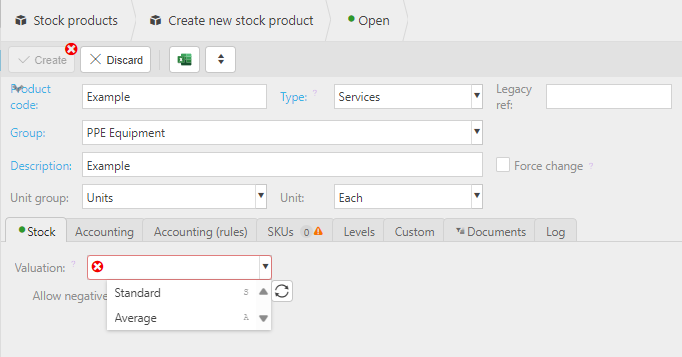
Select the method of valuation for the stock product.
Note
If the Stock product already has posted documents, then this option will be blocked.
The tooltip will show Valuation method cannot be changed as documents have been entered against this product.
Standard: This method implies manual assigning of cost to items.
Average: This valuation method divides the total cost of purchased items by the number of items in stock.
Allow negative stock: Negative stock is only allowed for Standard valuation method.
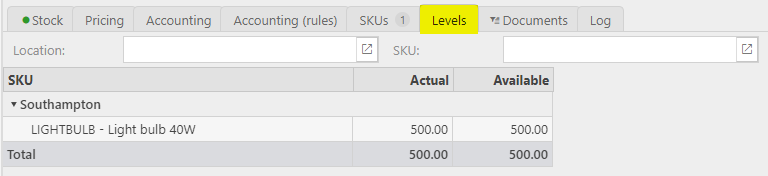
You can select the valuation method in this tab.

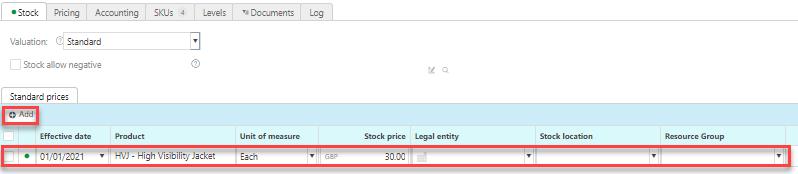
You can add the standard pricing for this product by pressing Add then filling out the selection criteria.
Note
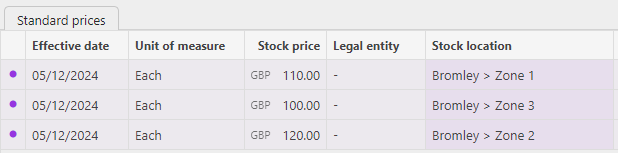
Multiple lines can be added for the same stock but located in different locations (and can be differing prices and quantity).
When one of these Stocks is used in a document, the appropriate stock, price and quantity will be used as appropriate to the location selected.


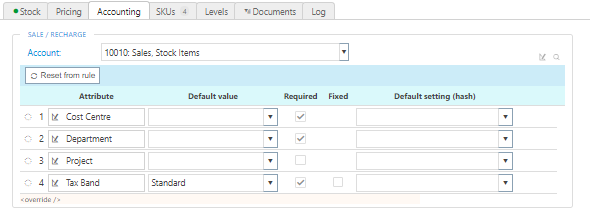
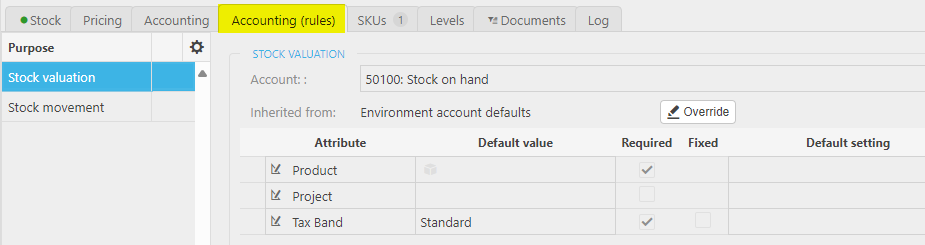

Once you have made the changes, select Create ...
or Save.
How to lock Stock Products
Lock a Stock product
Locking a stock product will disable it from being used throughout the stock features.
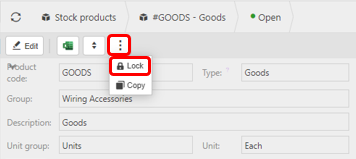
To do so, open the product that you wish to disable.
Select Lock.
How to copy Stock Products
Copy a Stock product
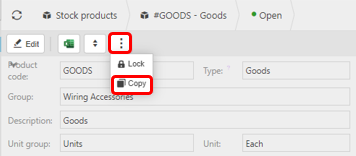
If you would like to create a similar stock product to another pre-existing product, you can copy then make changes to it.
To do so, choose the product that you would like to copy.
Select Copy.
How to Import/Export Stock Products
Import/Export Stock products
Select Stock products from one of the options as shown above in Viewing Stock products.
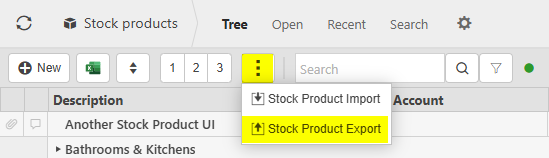
Select the
 icon and select Stock Product Import.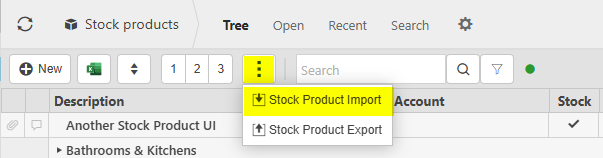
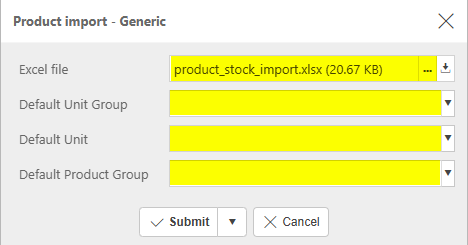
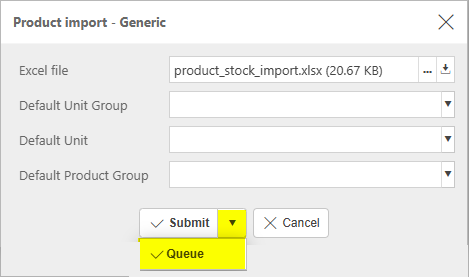
Enter the name of the Excel file, which is saved on an external source, and other options.
Tip
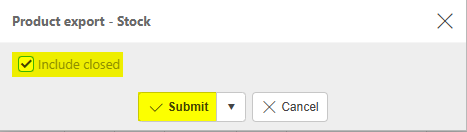
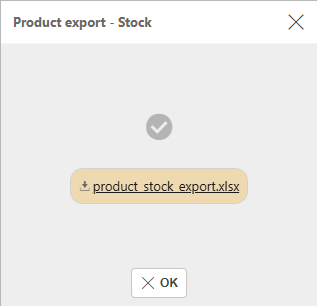
To create an Import file with the correct field names and formatting, Export a file first and save to your external source. Then use this file to add details ready to import.
Select Submit.
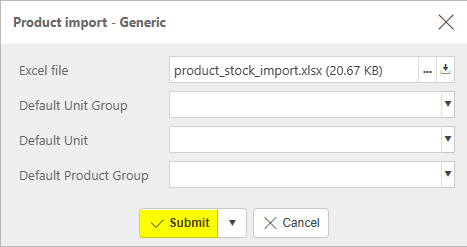
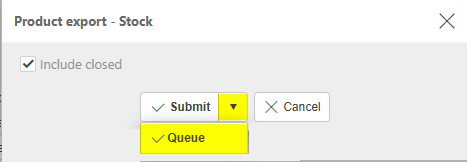
Selecting Queue from the dropdown option will queue the import process until other actions in iplicit are completed.
Warning
iplicit allows a maximum of 5,000 rows in a single Import.
If your Import is too large, an error message will tell you that the Import cannot be processed and will advise you to create smaller Import files.
If the latter is not possible, please contact Customer support.
Updated January 2026