Stock Levels
The stock level feature allows you to view the status of your stock through: incoming, actual, outgoing, available, returned and free stock.
The stock levels are affected by different stock Documents. For more information please see: how stock documents affect the stock levels.
Note
To view the legacy version, please select Legacy User Guide.
How to view Stock Levels
Viewing Stock Levels
As per Generic Navigation options, either from left-hand navigation panel, select Stock levels from the Stock folder or enter Stock levels in the Search option.
This will then show the Stock levels on the system which can be viewed by selecting one of the Sets - SKU, Location or SKU, Location.
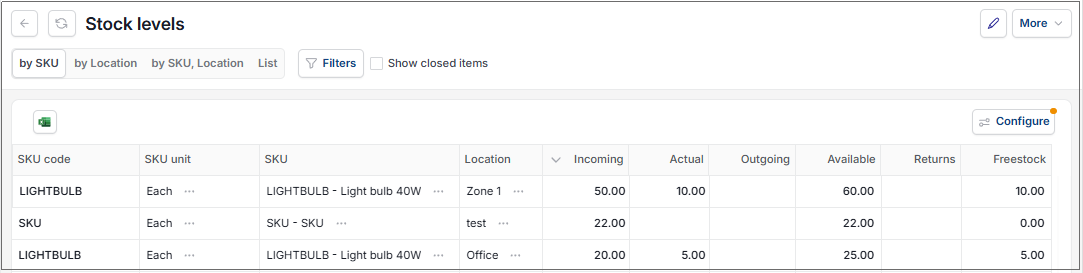
SKU: Stock keeping unit
Incoming: The amount of stock coming in e.g. stock that has been purchased but not yet received.
Actual: The stock that is currently in house e.g the physical items sitting on your shelf.
Outgoing: The stock that has been sold.
Available: The stock that is available to be used/sold (incoming + actual - outgoing = available)
Returns: Returned stock e.g a customer did not want an item so they are sending it back.
Freestock: This is the stock available after taking into account the outgoing stock (actual - outgoing = freestock).
Tip
To modify the columns displayed, select  option on the right of the column display, then tick/untick the information you want to hide or display.
There are various options to view the Stock Levels.
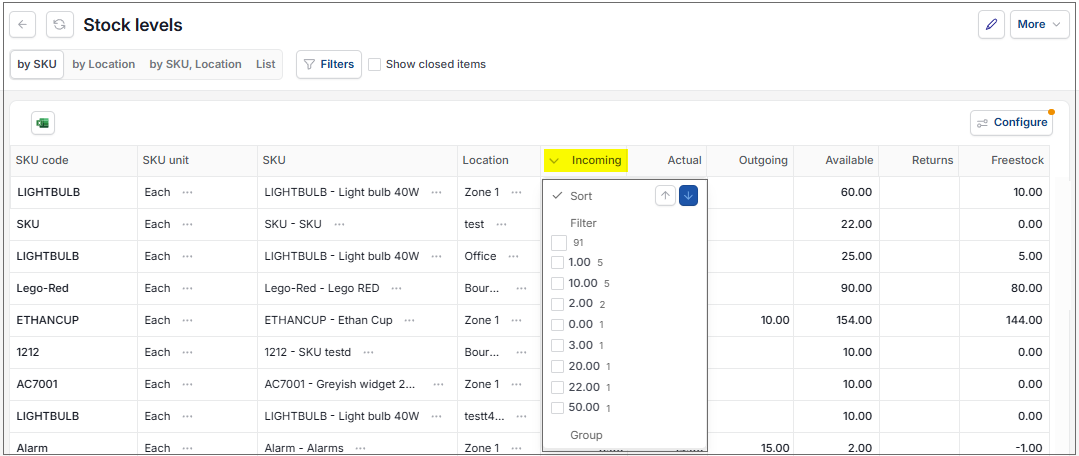
By selecting a stock level you can filter by amount.
The Tree layout allows you to view the stock levels in collapsible headings
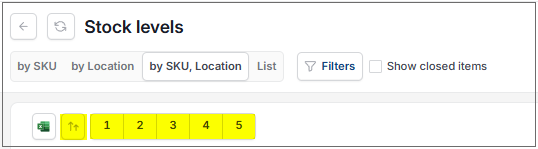
This layout allows you to view the stock levels in collapsible headings
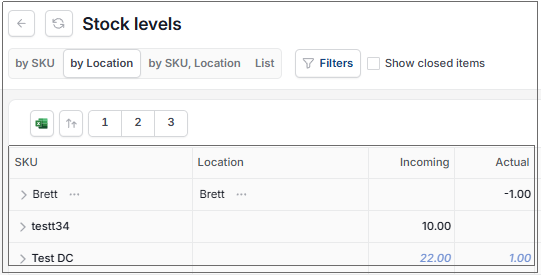
Selecting a heading will open the section.
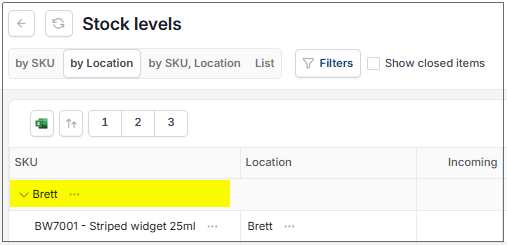
Selecting the tree numbers will open the collapsible levels e.g. 2 will open 2 levels (heading and sub categories on show)
Tip
You can open and close all levels of the tree by selecting
 .
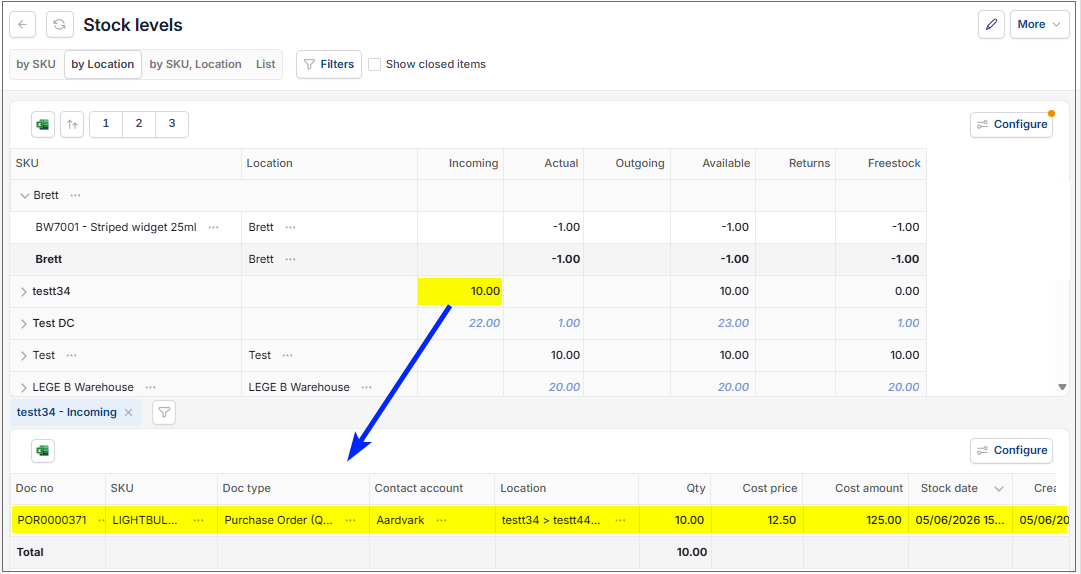
By selecting a stock amount, the associated data will appear as individual lines below.
How to create a Stock level document
Create a stock level document
Select Stock levels from one of the options as shown above in Viewing Stock levels.
Select Create document from the
 option.

Select Document type.
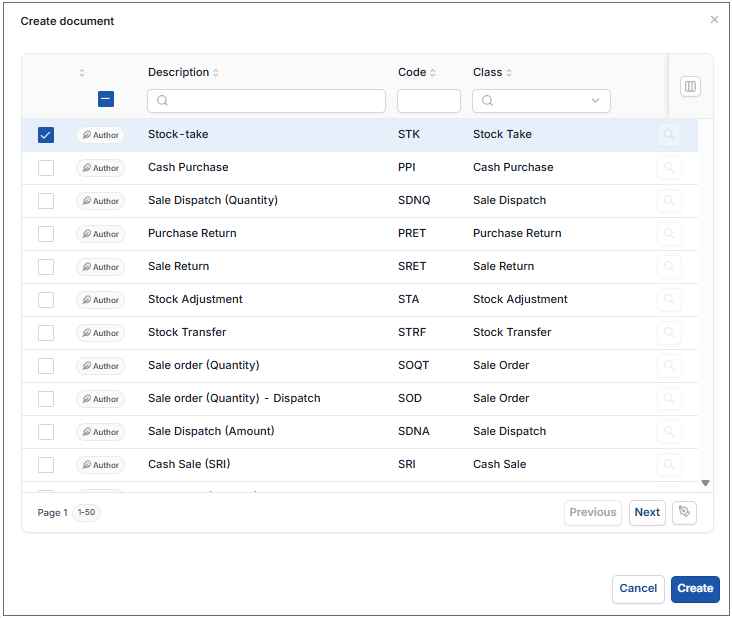
Then select Create.
Updated October 2026