Intervals
Intervals are used to present information, grouped by date ranges.
iplicit provides a selection of authored Intervals, but you are also able to enter your own.
Example uses of Intervals are for the presentation of Aged Debt, Aged Creditors, Bulk payments and Bulk receipts.
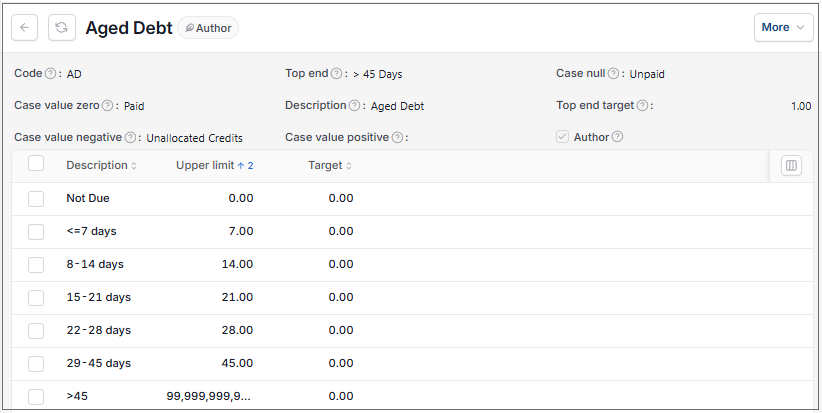
You can Create new Intervals and Lock existing Intervals that you don't want to use.
Note
To view the legacy version, please select Legacy User Guide.
How to view Intervals
Viewing Intervals
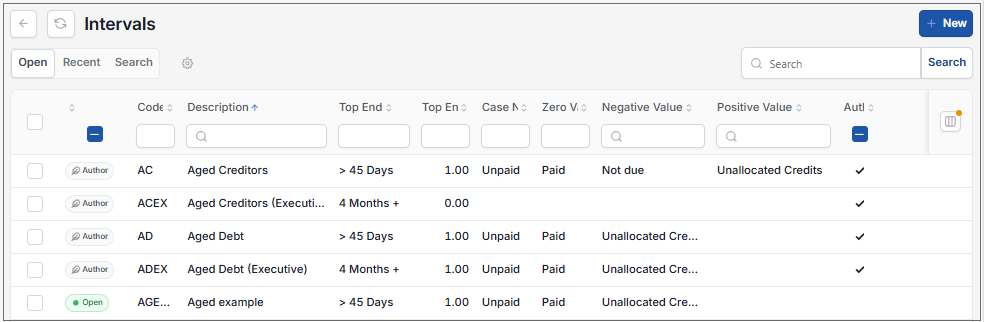
As per Generic Navigation options, either from left-hand navigation panel, expand Settings and select Intervals from the Debt folder or enter Intervals in the Search option.
This will then show the Intervals on the system where normal customisation of Sets can be used.
Tip
To modify the columns displayed, select  option on the right of the column display, then tick/untick the information you want to hide or display.
How to create Intervals
Create an Interval
Select Intervals from one of the options as shown above in Viewing Intervals.
Select New.
Tip
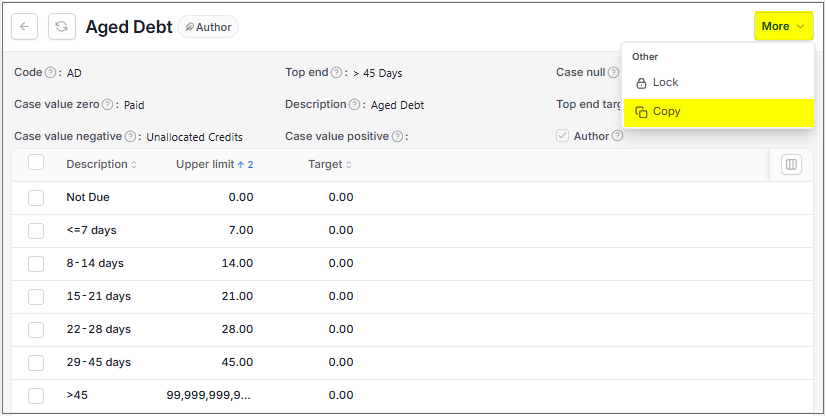
To speed up creation, select and open an existing Interval and select Copy from the
 options and then make additions/adjustments as per your requirements.
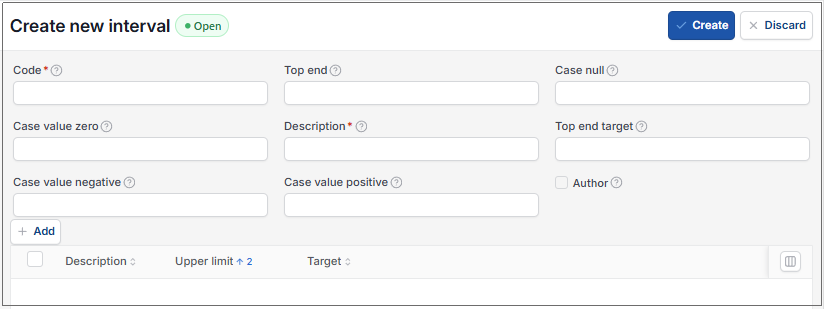
Enter the following fields -
- Code: Enter a unique code.
- Description: Enter a unique description to describe the Intervals.
- Top end: Enter a description that will be shown for the top end.
- Top end target: Enter a target percent to be used.
- Case null: Enter a description that will be shown when the value is null.
- Case value negative: Enter a description that will be shown when the value is negative.
- Case value zero: Enter a description that will be shown when the value is zero.
- Case value positive: Enter a description that will be shown when the value is positive.
Select Add and enter a row for each banding.

Note
The lower limit is always greater than the previous upper limit e.g. for "8-14 days", the upper limit is 14 and the lower limit is > 7.
The Target is a % which could be used to measure performance.
Select Create when complete.
You will now need to update the Environment settings to use the new/ revised intervals.
How to locl/unlock Intervals
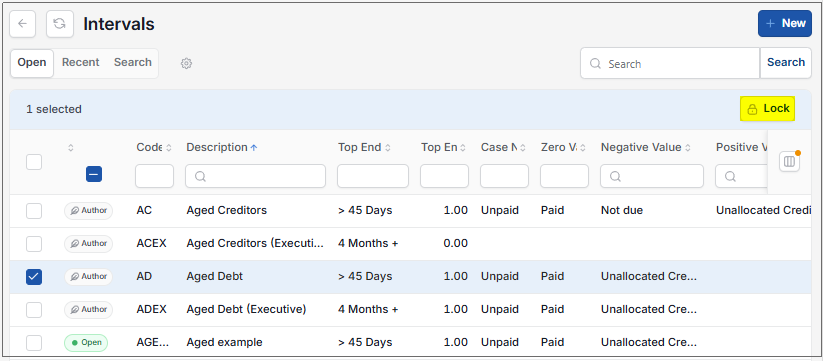
Lock an Interval
Select Intervals from one of the options as shown above in Viewing Intervals.
Select an Interval.
Select Lock.
Tip
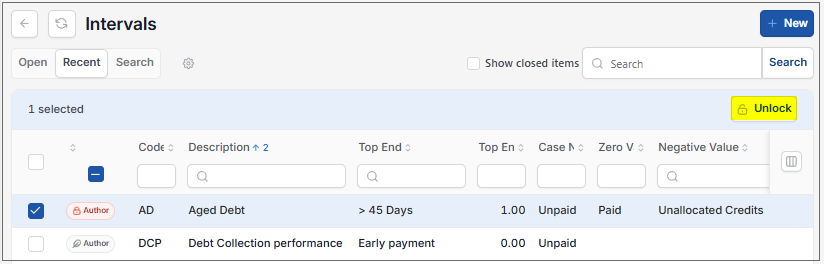
Locked records can easily be unlocked by selecting a locked interval and selecting Unlock.
Setting Environment Defaults
Environment settings
Select Environment defaults.
Enter Interval in the search.
Amend the interval default(s) to use the interval.
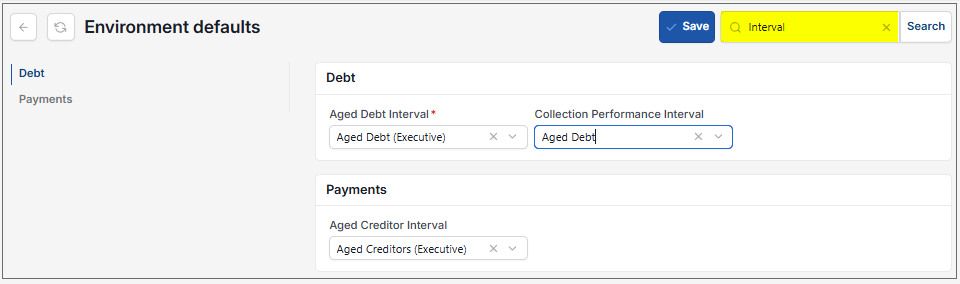
Save the change(s).
Reload to ensure you have the latest settings.
Updated August 2026